Online learning is only successful if students actually learn. As a case study for Jolt, I was tasked with supporting the creation of an A/B Testing course. The goal wasn’t just to deliver content; it was to create a digital environment where complex technical skills could be mastered by anyone, a fully democratised learning experience.
The Challenge: Making Data Interactive
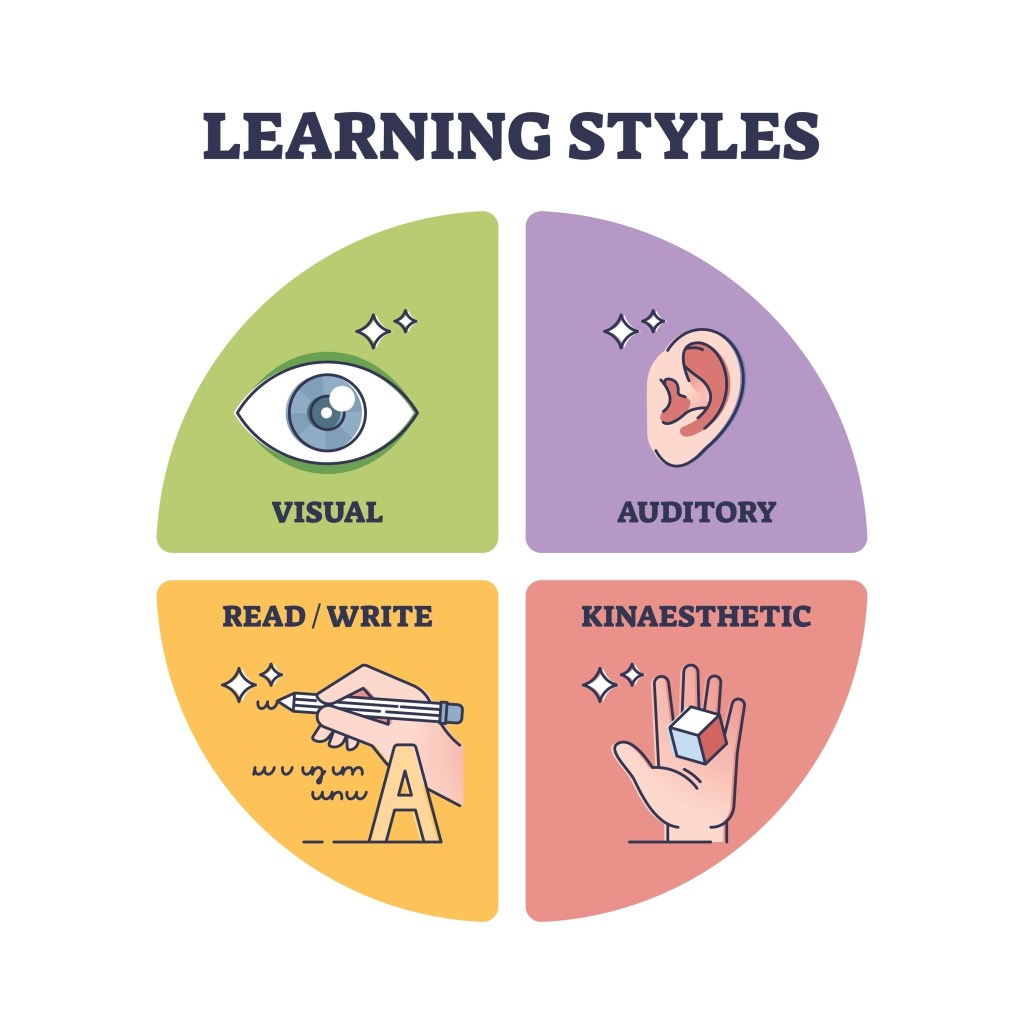
A/B testing is a technical, logic-based skill. In a virtual classroom, it’s easy for students to lose focus if they are just watching slides. We needed a way to cater to different learning styles—Visual, Aural, Read/Write, and Kinesthetic—simultaneously. Using the existing user personas, I had to create a curriculum and present its value to those students.
| Arnold – NEET (Not in Education, Employment or Training) | Raya- Experienced Upskiller |
| 18 years old | 34 years old |
| Wants to learn quickly for the job market. | Busy, needs actionable skills or awareness of how the skills are done by other members of team |
| Has little experience, formal education up to 18 years old | University educated but used to a workplace environment |
| Apprehensive, anxious, but lots of recent academic experience | Has a team to manage, has little time and lots of responsibilities |
The Strategy: The VARK-Driven Curriculum
I focused on creating a multi-layered learning experience:
- Interactive Sandbox Environments: We leveraged technology to create virtual workspaces. Instead of reading about an A/B test, students actually ran one, catering to “Kinesthetic” learners.
- Dual-Purpose Guides: I designed comprehensive Teacher and Student guides. The Teacher guides empowered Teaching Assistants to provide consistent support, while Student guides acted as “on-the-job” references after the course.
- Visual Data Logic: I designed infographics and UI mockups that broke down complex statistical significance into easy-to-digest visual cues.
- Actionable experience: Students needed realistic examples of how they could use the concepts in real-world examples with technology they would use in the workplace.
- Safety: NEET students needed real-world skills, but adapted to a world that was currently quarantined.
Shutterstock
The Result: Skills That Stick
Content Design
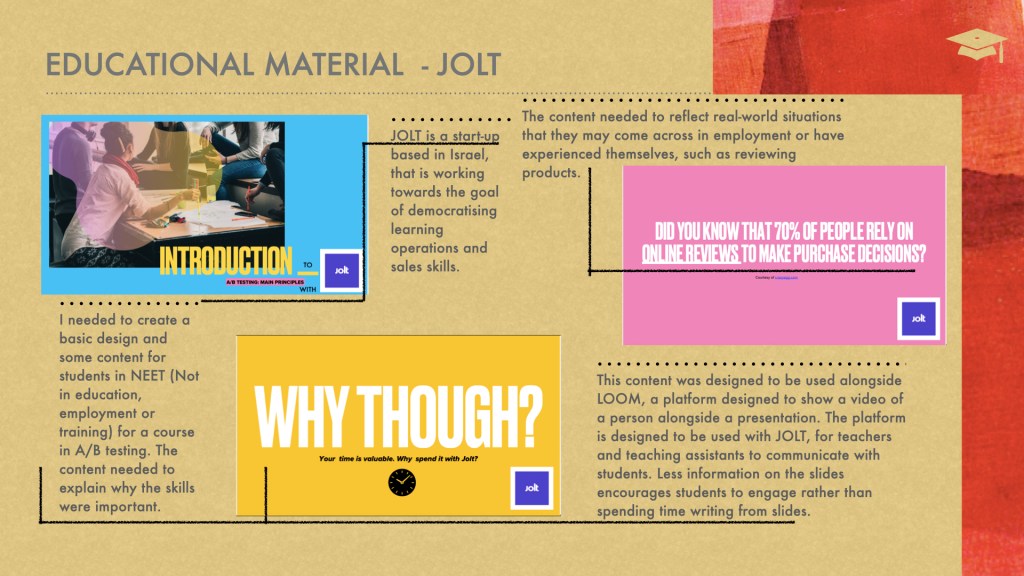
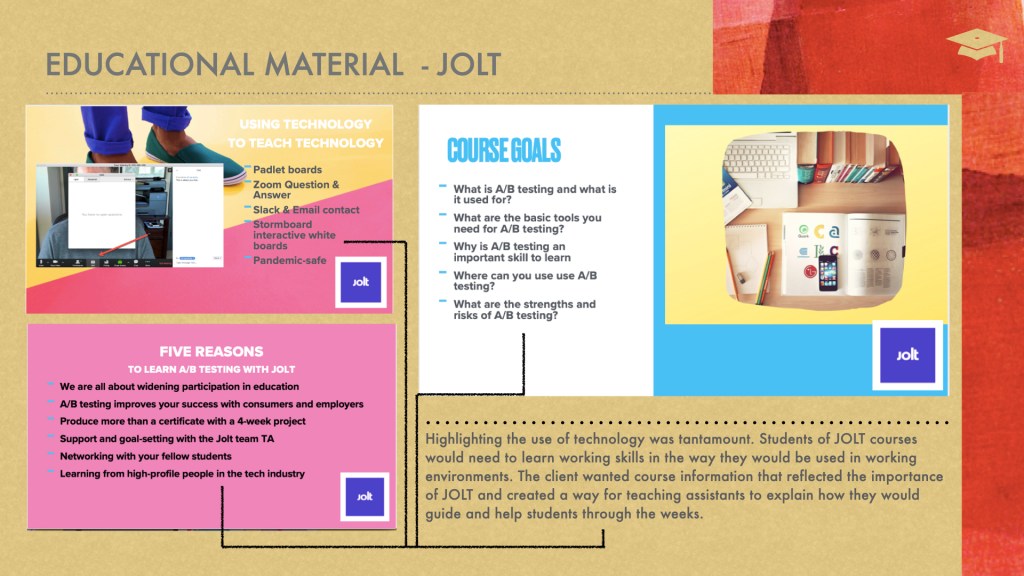
- Slides matched the colour scheme for Jolt to help with brand loyalty
- Slides were sparsely populated to allow instructors to impart information and reduce the time spent focusing on writing from the slides
- Slides also reminded students of the value of online learning, supporting returning customers
- Slides encourage students to understand the value of using technology and what the industry standards are for the use of apps. Examples included Slack and Zoom.
By designing the course around how people actually process information, we saw significantly higher engagement and practical application. Students didn’t just finish the course; they walked away with a professional skill set they could immediately apply in a work environment.
Latest posts
Designing for High Stakes: How Strategic Email Design Fuelled Laybuy’s Sales Success
In the competitive world of Buy Now, Pay Later (BNPL), your message needs to do more than just reach an inbox—it needs to cut through the noise. During a major sales campaign at Laybuy, I was tasked with designing an email suite that not only looked good but also drove measurable action. The Challenge: Standing…

Debunking Myths in Children’s Activity Sector
There is a common misconception that the children’s activity sector, everything from holiday camps to after-school sports aren’t viable childcare or run by professional, passionate, educated people. In reality, it is a highly regulated, logistically complex industry that requires elite-level organisation. At Coordinate Sport, my mission was to use content to bridge the gap between…

From Graduation to Career: Designing Content That Bridges the “Experience Gap”
For many recent graduates, the transition from university to a professional career feels less like a step and more like a leap across a canyon. At Futureboard Consulting, my goal was to build the bridge. By turning direct user interactions into high-impact long-form content, I helped transform the graduate job search from a source of…

 MoGoPortfolio
Leave a comment