
Project Case Study
Role: UX Designer (Business & Product Strategy)
Project Type: Portfolio / Concept Project
Platform: Mobile (iOS / Android)
Industry: Luxury Travel & Transport
Tools used: Figma & Canva
Target
Miles & Miles is a luxury car hire service offering premium vehicles to individual and corporate clients. The brand specialises in airport transfers and serves high-end customers with disposable income.
This project focused on designing a responsive mobile app that encourages existing customers to adopt a new, higher-value service: home delivery and pickup, increasing both conversion and basket size.
Contribution
I worked as part of a cross-functional team, including:
- UX Research
- Graphic Design
- UX Design
My primary contribution was providing business and product insight, informed by my background in travel technology, and shaping the user journey to align with commercial goals. Having worked at the start-up Minicabit, there are a few areas I shared:
- Airport transfers were one of the most common journeys that users would take
- Premium services did not require greater complexity in language – simple was always best
- Signposting services/products commonly used by a user reduces friction
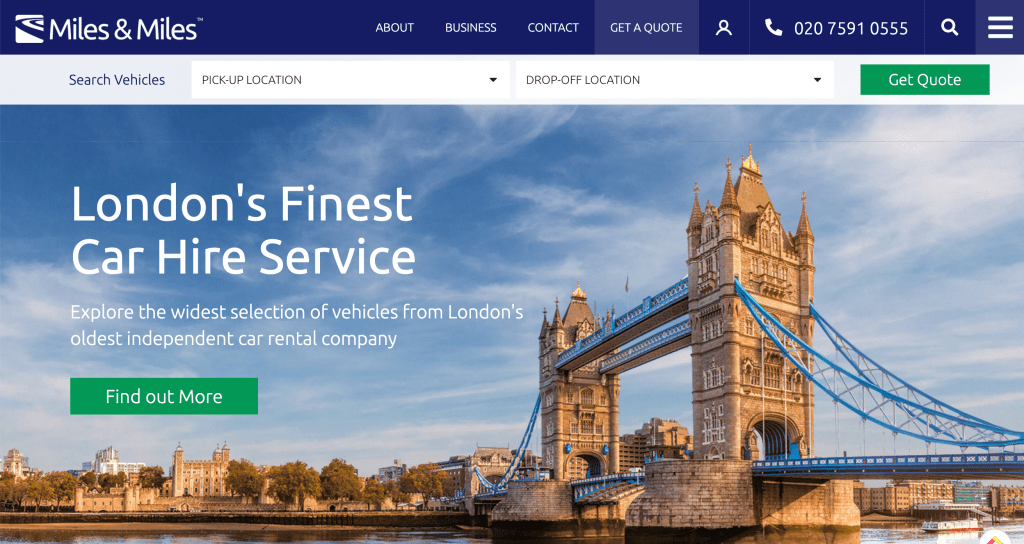
The Premium Service: Miles & Miles

Goal
Design a mobile experience that:
- Improves conversion and basket size
- Nudges users toward higher-value services
- Reduces friction in the booking flow
- Feels personalised and premium for returning customers

Business Problem
Miles & Miles wanted to expand beyond airport transfers and to promote a more expensive, premium home-delivery option.
The challenge was to:
Increase average order value while maintaining a premium, effortless experience
Encourage existing customers to choose home delivery over standard airport pickup
Educate users on a new service without disrupting a familiar booking flow
Goal
Design a mobile experience that:
Nudges users toward higher-value services
Reduces friction in the booking flow
Feels personalised and premium for returning customers
Improves conversion and basket size

User Journey & Strategy
Designing for Upsell
I created a user journey that intentionally prioritised home delivery and pickup:
- Larger, more prominent buttons were used to establish visual hierarchy
- Home delivery was surfaced earlier than browsing cars or airport pickup
- The hierarchy subtly nudged users toward the premium option without blocking alternatives
This approach allowed the business to upsell while maintaining user autonomy.
Improving the Booking Flow
Mobile-First Redesign
The existing website booking flow asked for multiple details upfront (postcode, dates, times, car type), creating friction and visual clutter.
Key design decision
I split this process into multiple, focused screens, which:
- Reduced cognitive load
- Improved scanability on mobile
- Allowed users to see available cars in their area more quickly
Cars were also sorted by availability at the start, helping users understand their realistic options earlier in the journey.
Personalisation & Happy Path
The app was designed primarily for existing customers, keeping them on a smooth “happy path” while still allowing discovery.
Key features included:
- Displaying previously rented cars for faster repeat bookings
- Highlighting similar or upgraded vehicles for upsell opportunities
- Maintaining a clear path to checkout with minimal decision fatigue

Content & Tone
To reinforce a premium, familiar experience, I focused on personalised and conversational copy:
- Example user names were surfaced where appropriate
- Colloquial, friendly messaging reduced formality without harming brand perception
- Copy reinforced confidence and ease throughout the journey
This helped make the service feel curated rather than transactional.

Outcome & Learnings
While this was a portfolio concept project, the design demonstrated how:
- Visual hierarchy can drive commercial outcomes without dark patterns
- Progressive disclosure improves mobile conversion
- Personalisation strengthens loyalty and repeat usage in luxury services
Key takeaways
- Upselling is most effective when embedded into the journey, not added on
- Mobile experiences benefit from early clarity over exhaustive data collection
- Existing customers respond well to recognition and familiarity
- Taking out the green button and centring on loyalty through the green bar and a non-specific postcode meant that any location is possible for the user. Fewer options but less cognitive load
MtGo Design

