Translating large amounts of content into digestible lessons is a skill. Tutoring exercised my instructional design skills to communicate methods and practices that supported my own academic learning. Customer education is no different, often coming down to providing multiple pathways to understand content in a multimedia format.
Pedagogical UX: Supporting young people
Look at how the background in tutoring offers complexity translation in its purest form, taking dense, intimidating information and making it easily accessible.
With young people, the preliminary lessons were designed to find out what they felt was the problem. Test those skills. Then, determine what the actual problem is and create content that de-mystifies those areas.
Empathy-based support: Futureboard Consulting
Graduates transitioning from university to employment needed guidance. Using qualitative user interviews of computer science graduates, I mapped their primary pain points in recruitment processes. I interviewed Computer Science graduates about their experiences. The consensus was that they wanted greater transparency in recruitment processes, including feedback sessions, so they could plan their moves accordingly.
I developed a range of long-form guides to support this, examining transferable skills, poor grades, standard recruitment processes and professionalism in the job market. They increased platform stickiness by providing graduates with specific “insider tools”. These were supported by graduate recruitment technology events, resulting in a 28% increase in graduates with 320 UCAS(ABB) or more.
[Include data table of questions used in Futureboard Consulting: User-Led Content for Graduates] – Complete/Available
Accessibility & Complexity translation: Jolt
Online learning often fails when it relies solely on video, especially if the aim is to provide technical skills that need to be practised in real-time. Breaking down complex technical concepts should be accessible and practical, providing tasks to complete with real-world tools and programs.
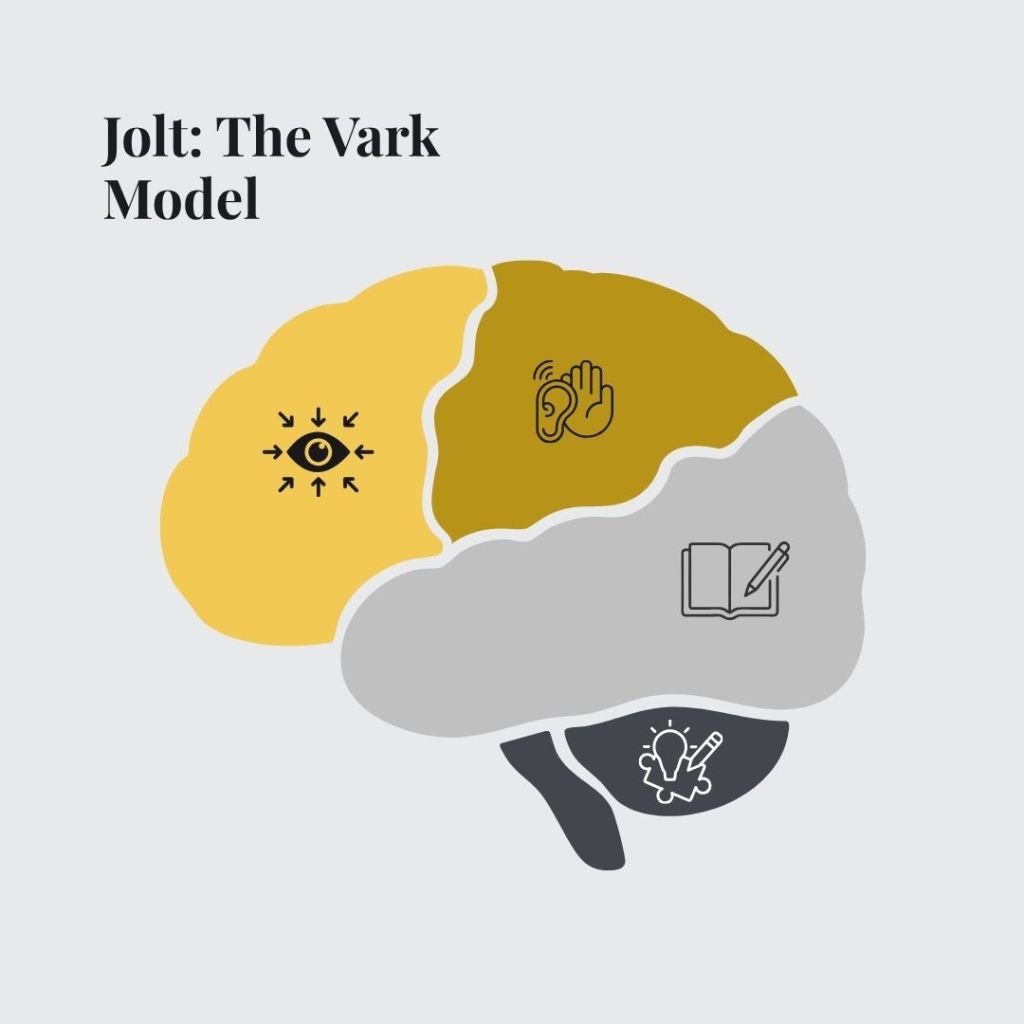
Using the VARK model (Visual, Aural, Read/Write, Kinaesthetic), I designed a curriculum that would support NEETs (Not in Education, Employment or Training). I proposed an interactive environment where they could use and test apps for communication, customer or client management and business development.
- Interactive Sandbox Environments: We leveraged technology to create virtual workspaces. Instead of reading about an A/B test, students ran one, catering to “Kinesthetic” learners.
- Purpose-built guides: I designed comprehensive Teacher and Student guides that empowered Teaching Assistants and encouraged students to become digital natives with apps and programs for work environments.
- Visual Data Logic: I designed infographics and UI mockups that broke down complex statistical significance into easy-to-digest visual cues.
Learner Education: Interaction Design Foundation
Lifelong learning is the new normal. Translating the minutiae of simple and complex concepts that allow learners of all backgrounds to engage with your content is key to complexity translation. Breaking down the concept of the user persona, I adapted the content for basic learners, distilling the information into content with accessible examples and visual cues.
 MtGoPortfolio
Leave a comment